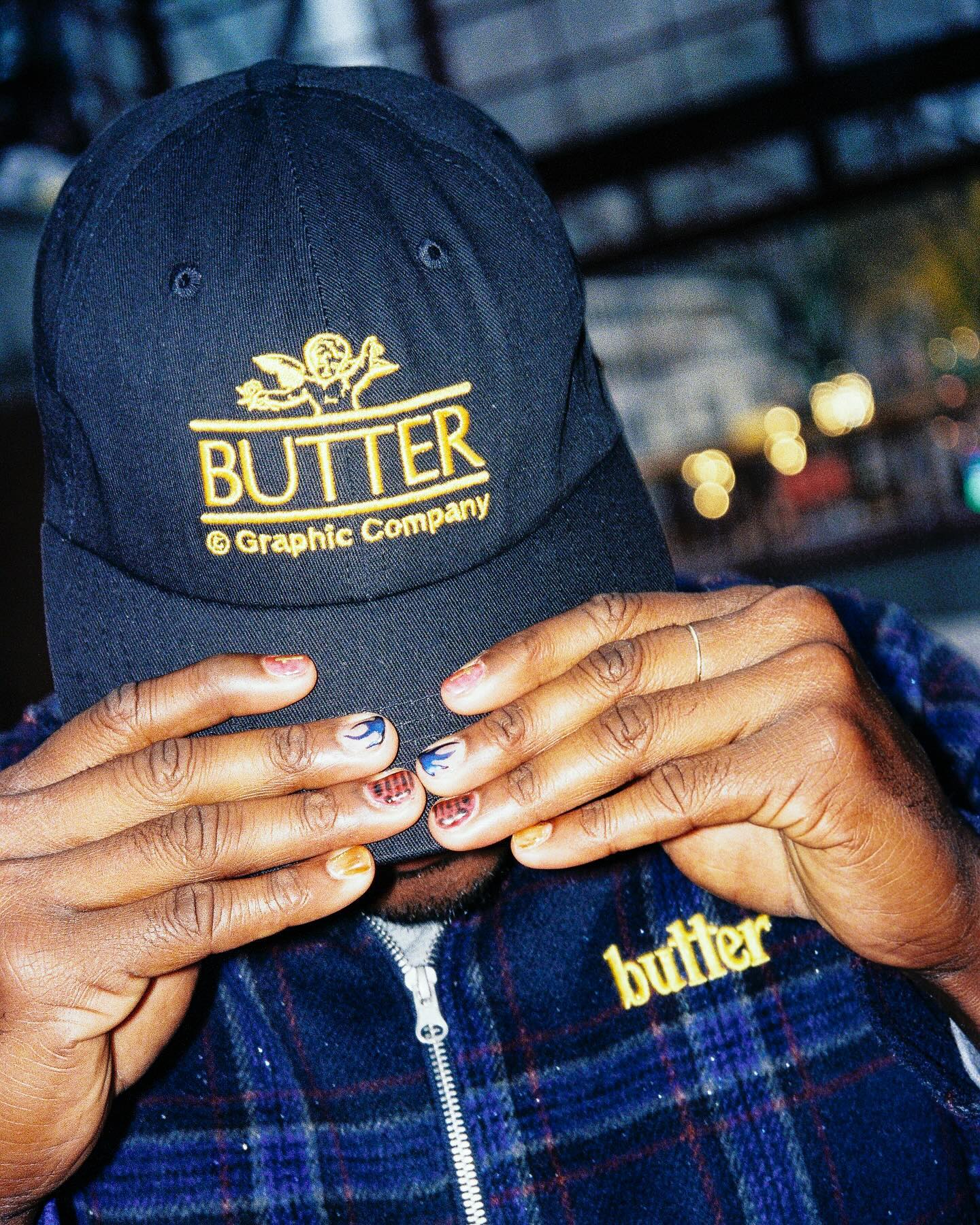
There are skate brands, and then there are brands that feel like they were made by people who actually care — people who grew up filming friends on VHS, writing down the songs from 411VM issues, and getting obsessed with the records those songs were sampled from. Butter Goods, out of Perth, Western Australia, is the latter. Since 2008, this independently owned label has been doing things on its own terms: no hype campaigns, no influencer rollouts, no limited drops engineered to manufacture FOMO. Just well-made clothing, deeply considered graphics, and a cultural worldview that spans jazz, soul, reggae, and the golden era of nineties skateboarding. Shop Butter Goods at Gallery Streetwear and you'll understand why the brand has quietly built one of the most loyal followings in the global skate and streetwear world.
Born Out of Perth's Isolation
Perth holds a particular distinction in world geography: it is one of the most isolated major cities on the planet, sitting some 2,700 kilometres from the nearest Australian metropolis. For Garth Mariano and Matt Evans, the two childhood friends who founded Butter Goods in 2008, that remoteness shaped everything. Growing up skating together in Perth, they were never sponsored — their words — but they lived and breathed the culture: filming their crew on VHS tapes, trading skate videos, and obsessing over the way skating, music, and clothing fed into each other in that pre-internet era when things were harder to find and therefore more meaningful.
Before launching the brand, Mariano was managing Perth's Beyond Skate city store while studying graphic design. Evans had been building boards by hand with his uncle since high school, and both had been screen printing their own tees informally for years. The actual catalyst was a quiet act of preservation: many of the Australian skate brands they had grown up idolising had quietly disappeared, and the gap felt like an invitation. "It was always a dream of ours," Mariano has said. "I think it's something that all kids that grew up skating and drawing logos on their school files dreamt of doing. As to why… the how is almost the why."
Around 2007, feeling uninspired in day jobs, both men quit to study graphic design. The first run of Butter Goods T-shirts — nineties-influenced, jazz-referencing — set the template the brand has refined ever since.
The Rabbit Hole: Music as a Design Language
To understand Butter Goods, you have to understand how Garth Mariano thinks about music — specifically, how he traces it back through sampling. As a teenager, he would write down the names of songs used in skate videos. That led him deep into hip-hop, and hip-hop led him to the records being sampled: jazz, soul, funk, roots, reggae. Artists like Yusef Lateef, whose 1961 album Eastern Sounds fused jazz with Middle Eastern and Southeast Asian scales, became touchstones. The work of Charles Mingus — the avant-jazz bassist and composer who bent the rules of harmony and structure throughout the fifties and sixties — became another. And Roy Ayers, the vibraphonist who bridged hard bop and soul and whose work became one of the most sampled catalogues in hip-hop history, found his way onto Butter Goods T-shirts in the brand's SS 2019 collection.
"I've always treated designing somewhat like sampling," Mariano told HHV Journal. "You pull from the past to create something new. Hopefully we can introduce a new wave of kids to something they may not have come across before." That line explains everything about the brand's graphic identity. The tributes to jazz and soul greats aren't decorative choices — they're genuine acts of cultural transmission, the same impulse that led hip-hop producers to dig through crates at the back of record shops. The brand exists, as one reviewer put it, "in that glorious dimension where skateboarding and music collide."
This music-first sensibility has produced some of the most considered collaborations in the streetwear space. In 2021, Butter Goods worked with the estate of Charles Mingus and the Jazz Workshop, Inc. to produce a limited tribute collection honouring the bassist's life and work, illustrated with archival photographs by seventies photographer Jean-Pierre Leloir. In 2024, the brand partnered with Blue Note Records — the legendary American jazz label founded in 1939 that recorded Miles Davis, John Coltrane, Art Blakey, and Herbie Hancock — on a capsule collection that translated the label's iconic cover art and minimalist typography directly into apparel. The brand even named a full-length skate video after the collaboration: Blue Note, released in August 2024, running seventeen minutes and featuring a wide team of riders across San Francisco, New York, and beyond. The 2025 follow-up, titled Miles Davis, carried that thread forward. These aren't marketing stunts. They are, in every sense, a brand speaking its own language.
The Aesthetic: Vintage, Considered, Never Derivative
Butter Goods occupies a specific aesthetic register that is easy to recognise and difficult to replicate. The graphics lean toward hand-drawn illustration, cartoon-inflected figures, lyrical odes to musicians, Egyptian iconography, and the kind of offbeat imagery that feels more like a record sleeve from 1973 than a mood board assembled in 2025. The colour palette swings between bold colour-blocking and muted earth tones, with the two often appearing in the same collection to give buyers room to dress up or down. Cuts are relaxed and functional — baggy denim, heavyweight fleece, tracksuits, flannel shirts, and the kind of T-shirt that wears in rather than wears out.
Mariano is deliberate about not being too derivative. "We try not to be too systematic about things," he has said of the design process, describing each collection as "a mismatch collage of a ton of our influences." The nineties references are real — heavily influenced by the late-nineties sportswear era that defined the look of skateboarding as he grew up watching it — but the brand consistently injects its own voice to avoid what Mariano calls "cosplay." The result is clothing that sits comfortably in 2025 while feeling like it has a genuine history behind it.
The quality backs it up. Butter Goods apparel is built for actual use — for skating, for commuting, for the kind of daily wear that reveals whether a garment was made with intent. The heavyweight T-shirts hold their shape and colour through repeated washes. The fleece has substance to it. Perth's proximity to quality manufacturing in Asia, combined with the founders' commitment to not cutting corners, has produced a reputation for construction that sits well above the brand's price point.
The Skate Program: Style Over Spectacle
The Butter Goods skate team reflects the same values as the clothing. The roster — Casey Foley, Morgan Campbell, Ben Gore, Alex Schmidt, Philly Santosuosso, Dougie George, and Adilson Pedro among others — is not assembled around the highest-trick-count athletes. It is assembled around skaters with style, creativity, and personality. Casey Foley, a New Zealand-born rider with a smooth, legible approach to terrain, is the kind of skater that reminds you why watching someone glide through a city can be more compelling than watching a seven-stair attempt. Ben Gore, the San Francisco-based rider known for flowing through urban environments with meticulous line selection, co-directed the Blue Note video.
The video output is equally deliberate. The brand's filmography reads like a playlist: Irie (2015), Step Into a World (2018, the title borrowed from KRS-One), Expansions (2020), Contours (2023), Ginger Shot (2024), Blue Note (2024), and Miles Davis (2025). Every title carries a reference to jazz, soul, or the cultural furniture the brand cares about. Filming trips to Chicago, London, and across the US produce footage that lands in Thrasher without the brand needing to engineer its media presence. The work speaks for itself.
Team riders are given creative control over their own capsule collections. Mariano and Evans advise on seasonal needs but trust riders to bring their own visual voice — a model that treats the skate team as collaborators rather than brand ambassadors and produces more interesting outcomes as a result.
Building an Empire Quietly: Lo-Fi, Cash Only, and Global Distribution
The founding of Butter Goods was never the end of Mariano and Evans' ambitions. In 2014, they opened Lo-Fi, a brick-and-mortar concept store on the outskirts of Perth's business district — a home for Butter Goods and for the independent international brands the founders admired but couldn't find on Australian shelves. Lo-Fi has since expanded to two Perth locations and carries its own in-house label with a nineties pop-culture aesthetic.
As the brand's international reach grew, the pair formalised distribution through Cash Only — an Australian distribution outfit supplying domestic and global retailers with Frog Skateboards, Yardsale, Pass~Port, and their own labels. This vertical integration, brand plus retail plus distribution all under the same ownership, gives Butter Goods a structural independence that most labels its size never achieve. They are not beholden to a parent company's growth targets. They keep distribution tight, grow deliberately, and hold creative control at every stage.
The global footprint is notable without being bloated. Stockists span the US, UK, Europe, Japan, and Australia. Collaborations with Nike SB, HUF Worldwide, DC Shoes, PUMA, and Blue Note Records have been chosen for cultural fit rather than exposure value. When discussing the PUMA partnership in 2021, Mariano framed the brand's approach plainly: "Whenever we look at collaborations, we try to look at it as, 'would we make these things without this collaboration?' If the answer is yes, then it's probably not the right move."
Why Butter Goods Is Different
In a market defined by artificial scarcity and brand identities built around hype rather than substance, Butter Goods occupies the opposite position. There are no countdown timers, no algorithmically optimised drop announcements, no celebrity seeding campaigns. The brand follows a seasonal release model — four collections per year — and when a piece sells out, it is rarely restocked. Scarcity here is a product of limited production, not manufactured urgency.
The brand's independence underpins all of this. Unlike labels absorbed into holding companies, Butter Goods remains skater-owned and skater-operated, answerable only to the community it came from. "The irony is, I don't think a brand like ours could exist on a global scale without the internet," Mariano has said. "But the pre-internet world really influences how we design and we now get to use all the advantages of a post-internet world." That dual consciousness — rooted in analogue culture, operating in a digital present — gives the brand its particular texture.
Within the broader Australian skate scene, Butter Goods operates as an elder statesman while remaining genuinely current. Alongside Pass~Port and the Cash Only label, it has helped establish Perth and Australia as credible sources of independent skate culture — a counterpoint to California's long-held default position at the centre of the global market. Shop Butter Goods at Gallery Streetwear to see what the brand is building season by season.
How to Style Butter Goods
The clothing functions as a wardrobe, not a statement. Butter Goods pairs naturally with other considered brands that share its commitment to quality and cultural rootedness.
The classic street build: A Butter Goods heavyweight graphic tee tucked into Polar Skate Co. Big Boy or Surf pants, with a pair of Clarks Wallabees in beeswax or tan. The Wallabee has been a staple of both the nineties hip-hop scene and the skate world, which makes it a natural companion to a brand operating at exactly that intersection. Finish with a Butter Goods 6-panel or camp cap and leave it there.
Layered for the Okanagan autumn: A Butter Goods work jacket or fleece pullover over a striped long-sleeve, with relaxed Butter Goods chinos or denim. New Balance 1906R or 2002R trainers add a muted technical note that doesn't compete with the graphic weight of the outerwear. The kind of outfit that works skating to a spot and works walking into a coffee shop without a costume change.
Clean and tonal: A Butter Goods sweatshirt in grey, navy, or bone, layered under a Dime MTL crewneck for extra weight. Polar Big Boy pants in a matching tone, Clarks Desert Boots. The whole look sits in a register that is informed by skateboarding without announcing it — a version of the brand that has expanded Butter Goods well beyond the core skate audience without sacrificing any identity.
Where to Find Butter Goods in Canada
Gallery Streetwear, located at 588 Bernard Avenue in downtown Kelowna, BC, is one of the few Canadian retailers carrying Butter Goods on an ongoing basis. The store was built on the same logic as the brand it stocks: every label carried is chosen with intent, not because it trends, and the Butter Goods selection reflects that curatorial consistency. Whether you are discovering the brand for the first time or adding to a collection that is already a few seasons deep, the Butter Goods collection at Gallery Streetwear is the most reliable way to access current and archival pieces in Canada. Gallery ships across Canada, so wherever you are in the country, Perth's finest is within reach.
Frequently asked
Where can I buy Butter Goods in Canada?
Gallery Streetwear is an authorized Canadian Butter Goods retailer based at 588 Bernard Ave in Kelowna, BC, and ships Butter Goods Canada-wide. You can shop in person in downtown Kelowna or order online at gallerystreetwear.ca. Free tracked shipping on Canadian orders over $150 CAD.
Where can I buy Butter Goods in Kelowna?
Gallery Streetwear carries Butter Goods at 588 Bernard Ave in downtown Kelowna, BC. The shop is open seven days a week: Monday 12-5, Tuesday and Wednesday 11-6, Thursday to Saturday 11-7, and Sunday 12-5 Pacific. Local pickup is available at 588 Bernard Ave in downtown Kelowna.
Where is Butter Goods from?
Butter Goods is from Perth, Western Australia. Childhood friends Garth Mariano and Matt Evans founded the independently owned label in 2008, drawing on Perth's isolation and on a shared obsession with nineties skateboarding, jazz, soul and reggae records. The brand remains skater-owned and skater-operated.


