Gramicci : comment l’invention d’un grimpeur est devenue le secret le mieux gardé du streetwear
La plupart des marques qui définissent le streetwear contemporain remontent à une filiation familière — les planches à roulettes, le hip-hop, les terrains de basketball. Gramicci est différente. Son récit des origines commence avec un grimpeur californien suspendu à une paroi de granit du Yosemite, frustré par des pantalons qui ne bougeaient pas comme le fait un corps humain. Ce qui est sorti de cette frustration est l’un des vêtements les plus discrètement influents que la culture du plein air et de la mode aient jamais produits — et en ce moment, il vit son moment le plus important depuis le début des années 1990.
Mike Graham et les Stonemasters : là où tout a commencé
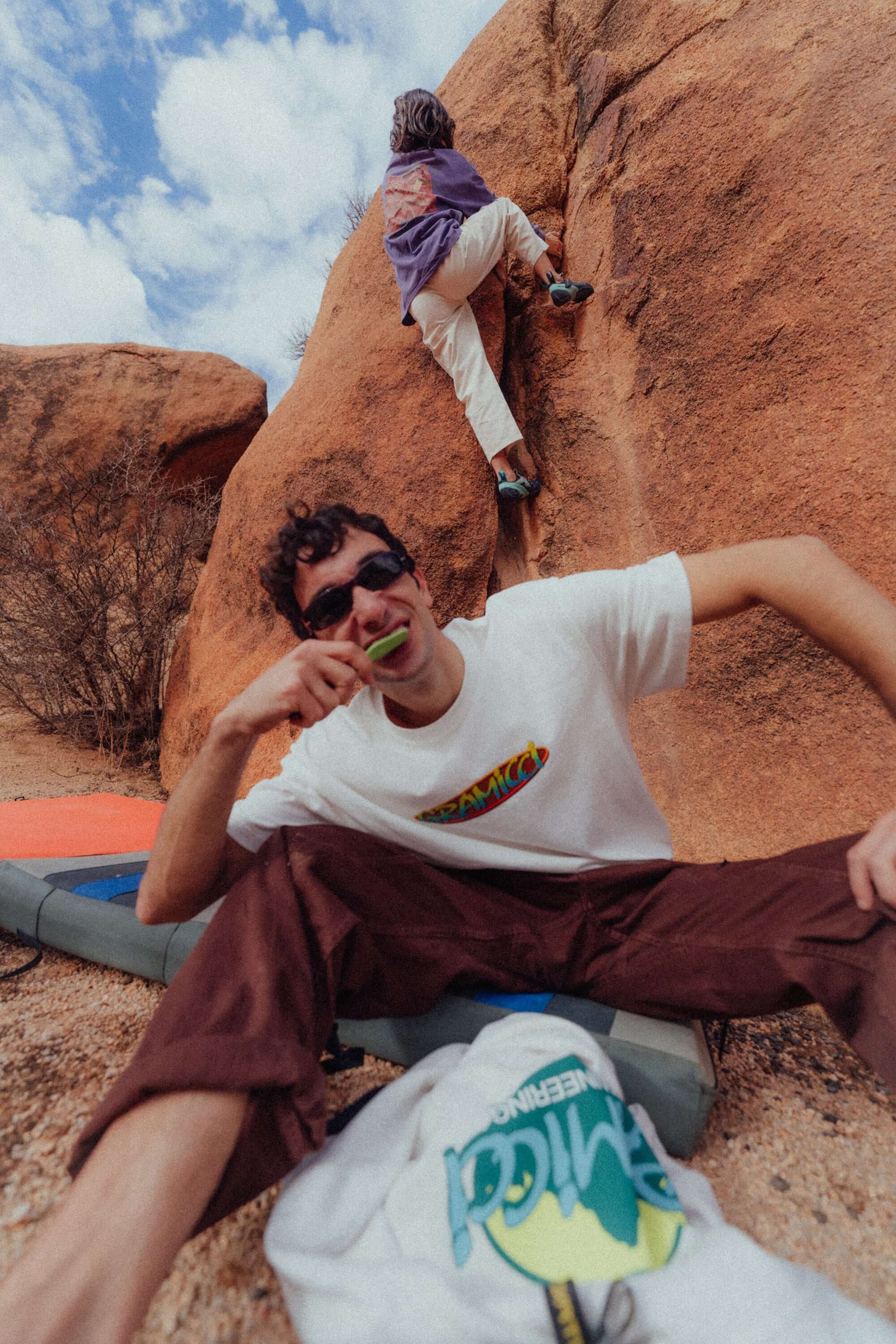
Pour comprendre Gramicci, il faut comprendre le Yosemite des années 1970. La vallée était devenue un aimant pour une nouvelle génération de grimpeurs connus sous le nom de Stonemasters — irrévérencieux, contre-culturels, obsédés par la technique. Inspirés autant par Jimi Hendrix que par Bruce Lee, ils se débarrassaient du matériel d’aide des générations précédentes pour développer l’escalade libre : la vitesse, le style et un engagement presque monastique à faire des choses difficiles proprement.
Parmi eux se trouvait Mike Graham — un jeune Californien, l’un des grimpeurs techniques les plus respectés de la vallée, et un fabricant né. Quand il n’était pas sur El Capitan, il était dans son garage d’Oxnard, à Ventura, à construire des portaledges légers et à distribuer des chaussures d’approche.
Le nom vient d’une blague. En 1974, Graham et des amis ont décidé de mettre en scène la première ascension entièrement italienne du Half Dome, au Yosemite. Aucun d’entre eux n’était italien. Ils ont inventé des noms : Graham, inspiré par l’alpiniste Emilio Comici, est devenu Michelangelo Gramicci. Le surnom est resté au Camp 4 et, huit ans plus tard, est devenu le nom de sa marque.
Le G-Short : une pièce d’équipement qui a tout changé
En 1982, Graham avait officialisé des années d’expérimentation artisanale en une marque. Le premier produit — le G-Short — a été bâti à partir de détails empruntés à des disciplines n’ayant rien à voir avec l’escalade. Un gousset en forme de losange, tiré des pantalons de kung-fu, a été placé à l’entrejambe pour une flexibilité des jambes sur 180 degrés. Une toile de coton résistante, venue du vêtement de travail, a donné aux shorts leur durabilité. Et une ceinture en sangle de nylon adaptée des courroies de sac à dos a été intégrée à la ceinture, permettant un ajustement d’une seule main par-dessus une base élastiquée.
Le système EZ-waist — la ceinture en sangle intégrée — n’était la norme dans aucune catégorie de vêtements en 1982. La combinaison d’un ajustement d’une seule main et du confort élastique permettait de porter le vêtement toute la journée sur une voie technique sans que la ceinture ne se déplace. Les grimpeurs les ont adorés immédiatement.
Le gousset à l’entrejambe était l’autre révolution. Quand vous faites du bloc — en levant une jambe vers une prise de pied à hauteur de hanche ou plus haut — la géométrie d’un pantalon standard vous nuit. Il tire sur la cuisse et crée une résistance exactement au mauvais moment. Le gousset Gramicci a éliminé ce problème complètement. Le tissu bougeait avec le corps plutôt que contre lui. Ce seul détail, tiré d’un uniforme d’arts martiaux et réappliqué en toile, a posé un modèle que d’autres marques de plein air ont mis la décennie suivante à rattraper.
Le G-Pant a suivi — la même logique étendue à un pantalon pleine longueur. Le mot s’est propagé du Camp 4 à Joshua Tree et à Tahquitz. Au milieu des années 1980, Gramicci n’était plus seulement un secret de grimpeurs; les surfeurs et les skateurs avaient découvert le logo Running Man, attirés par la durabilité et la liberté de mouvement qu’offraient les pantalons. En 1998, REI a dit à Graham que Gramicci était la marque numéro un dans ses magasins en dehors de sa propre étiquette. En 1999, l’entreprise réalisait 27 millions de dollars de ventes annuelles.
L’apogée des années 90 et les années maigres
Le début des années 1990 fut le premier âge d’or de Gramicci. La scène streetwear d’origine — les skate shops, les marques de surf, l’underground créatif du sud de la Californie — avait absorbé le G-Short et le G-Pant comme uniforme essentiel. Le logo Running Man occupait un espace culturel semblable à celui des premiers graphiques Stüssy : libre, accessible, lié à une liberté du plein air que la foule urbaine romantisait.
Cette époque n’a pas duré. À la fin des années 1990 et dans les années 2000, les changements de propriétaire et la restructuration corporative ont fait un tort que la marque a peine à absorber. La qualité a glissé, des livraisons ont été manquées et les designs ont perdu la fonctionnalité ciblée qui rendait les originaux essentiels. Graham a quitté l’entreprise en 1999. Au milieu des années 2000, un incontournable du streetwear était largement invisible — maintenu en vie davantage par la mémoire institutionnelle que par une pertinence culturelle active.
Le renouveau japonais : comment Tokyo a sauvé Gramicci
C’est ici que l’histoire de Gramicci prend le virage qui la définit aujourd’hui. Alors que le marché américain était largement passé à autre chose, le Japon, lui, ne l’était pas. La clientèle mode japonaise était attirée par Gramicci depuis le début des années 1990, à l’époque où les amateurs de contre-culture américaine mélangeaient des espadrilles vintage à du vêtement de travail, du surplus militaire et des références Ivy League. Le G-Pant s’intégrait à cette esthétique de superposition avec une aisance que peu d’importations américaines pouvaient égaler, apparaissant dans des select shops comme BEAMS dans le quartier Shinjuku de Tokyo et devenant un classique discret.
La culture mode japonaise fonctionne à un rythme différent des cycles de tendances américains. Elle est plus lente, plus référentielle et profondément investie dans la qualité et la provenance. Le récit des origines authentique de Gramicci, son excellente construction et sa fonctionnalité sans tape-à-l’œil en faisaient exactement le genre de marque que les acheteurs japonais gardent pour toujours. Quand la société mère américaine battait de l’aile, le Japon a gardé la flamme. La marque a fini par déménager sa base opérationnelle à Tokyo — une marque de plein air américaine, maintenant basée au Japon, portant toujours un nom italien.
L’opération japonaise de Gramicci est depuis devenue le moteur de la renaissance mondiale de la marque. Des collaborations avec des labels japonais comme Nonnative, White Mountaineering, NANGA, SOPHNET et mastermind JAPAN ont positionné la marque en plein dans le haut de gamme du streetwear de Tokyo. Le label « have a good time », l’une des empreintes streetwear les plus influentes du Japon, a livré sa propre interprétation du G-Pant. Ce n’étaient pas des coups de nostalgie — c’étaient de véritables appuis créatifs de la part de labels au goût sérieusement crédible.
Le moment gorpcore : pourquoi Gramicci est partout en ce moment
Le « gorpcore » — terme inventé par Jason Chen, journaliste à The Cut, en 2017 — décrit la migration du matériel de plein air technique vers les garde-robes urbaines. The North Face, Arc’teryx, Salomon et Patagonia en ont tous profité. Mais pour Gramicci, le gorpcore n’était pas une tendance à exploiter; c’était une description de ce que la marque avait toujours été. Un vêtement fait pour des parois de granit verticales porté dans des rues plates, c’est l’histoire de Gramicci depuis que les skateurs ont découvert les G-Pants au milieu des années 1980.
La différence aujourd’hui, c’est l’échelle et la légitimité culturelle. Le gorpcore a été validé par Frank Ocean et A$AP Rocky, amplifié par des milliards de visionnements TikTok, et adopté par des maisons de luxe de Loewe à Prada. Dans ce moment plus large, Gramicci occupe une position précise et précieuse : de véritables lettres de créance techniques, un vrai récit des origines ancré dans l’escalade difficile, et plus de quarante ans de continuité de design. Dans un espace encombré de marques qui jouent l’authenticité plein air, Gramicci la possède réellement.
La collaboration avec Brain Dead a amené Gramicci à une nouvelle génération d’acheteurs de streetwear lorsque le collectif d’art et label basé à Los Angeles a uni ses forces à la marque en 2021 et 2022. La silhouette d’alpinisme de Brain Dead — tons terreux, quincaillerie co-griffée, graphiques DIY — était exactement le genre d’appui culturel crédible dont la marque avait besoin sur le marché nord-américain. Le label japonais de mode plein air and wander a amorcé une série collaborative continue qui s’est poursuivie jusqu’en 2025, produisant certaines des pièces gorpcore les plus réfléchies actuellement sur le marché. BEAMS, la plus grande institution de select shop du Japon, a collaboré avec Gramicci à plusieurs reprises — le plus récemment pour le printemps-été 2026, en ajoutant des doublures de drainage en filet et un marquage orange unifié à la silhouette du G-Short.
Supreme, avec son instinct infaillible pour absorber les cultures antérieures, a sorti des shorts avec une ceinture en nylon intégrée et un gousset à l’entrejambe — un clin d’œil direct aux originaux Gramicci. Le vocabulaire que Graham a inventé dans un garage d’Oxnard est devenu un équipement standard.
La gamme de produits de base : ce qu’il faut savoir avant d’acheter
Le G-Short. L’original. Fait de sergé de coton biologique, avec le gousset en forme de losange, la ceinture en sangle de nylon intégrée et la taille élastique qui n’ont pas changé dans leur principe depuis 1982. Offert dans une palette tournante de coloris terreux et saisonniers, le G-Short est la pièce fondatrice de Gramicci — simple, bien coupée et véritablement polyvalente. Magasinez Gramicci chez Gallery Streetwear pour voir les coloris saisonniers actuellement en stock.
Le G-Pant. La version pleine longueur de la même philosophie. Une jambe droite et ample avec un entrejambe bas et gousseté qui crée une amplitude de mouvement inhabituellement généreuse pour un pantalon. La construction en sergé de coton biologique lui donne un poids et un tombé qui se situent entre le vêtement de travail et le vêtement décontracté — il se porte aussi bien habillé que décontracté. Contrairement aux pantalons d’escalade techniques d’autres marques, le G-Pant a une silhouette véritablement portable au quotidien.
Le Nylon Packable G-Short. Une évolution contemporaine faite de nylon hydrofuge à séchage rapide — résistant au chlore et compressible pour le voyage. Il porte le même ADN de gousset et de ceinture que l’original, mais le tissu coquille technique le rend pleinement amphibie : approprié pour une randonnée, une baignade ou une rue de ville, à parts égales. C’est l’engagement le plus direct de Gramicci envers le moment gorpcore — une pièce qui performe exactement comme annoncé dans tous les contextes.
Les pièces Shell et Stretch. La gamme technique élargie de Gramicci comprend le Stretch Shell G-Pant et le G-Short, faits d’un matériau coquille actif exclusif qui ajoute une résistance au vent et à l’eau au mandat de liberté de mouvement de l’original. Ce sont les offres les plus ouvertement techniques de la marque — celles qui réfèrent le plus explicitement au point de départ du Yosemite tout en s’inscrivant naturellement dans une garde-robe de mode plein air contemporaine.
Comment porter Gramicci
L’attrait de Gramicci dans un contexte streetwear, c’est que les pièces n’exigent presque rien de vous. Ce ne sont pas des vêtements autour desquels il faut construire — elles s’intègrent aux garde-robes existantes avec un naturel qui reflète une véritable utilité plutôt qu’une polyvalence fabriquée.
Le look quotidien facile : G-Short en olive ou sable, un t-shirt graphique de poids lourd dans un ton assorti, et des New Balance 574 ou 1906R. C’est la formule Gramicci qui circule sur les planches d’ambiance et les comptes Instagram de streetwear japonais depuis trois ans. Épuré, sans effort, fonctionnel. La quincaillerie de la ceinture du G-Short ajoute juste assez d’intérêt visuel pour le garder hors du territoire strictement utilitaire.
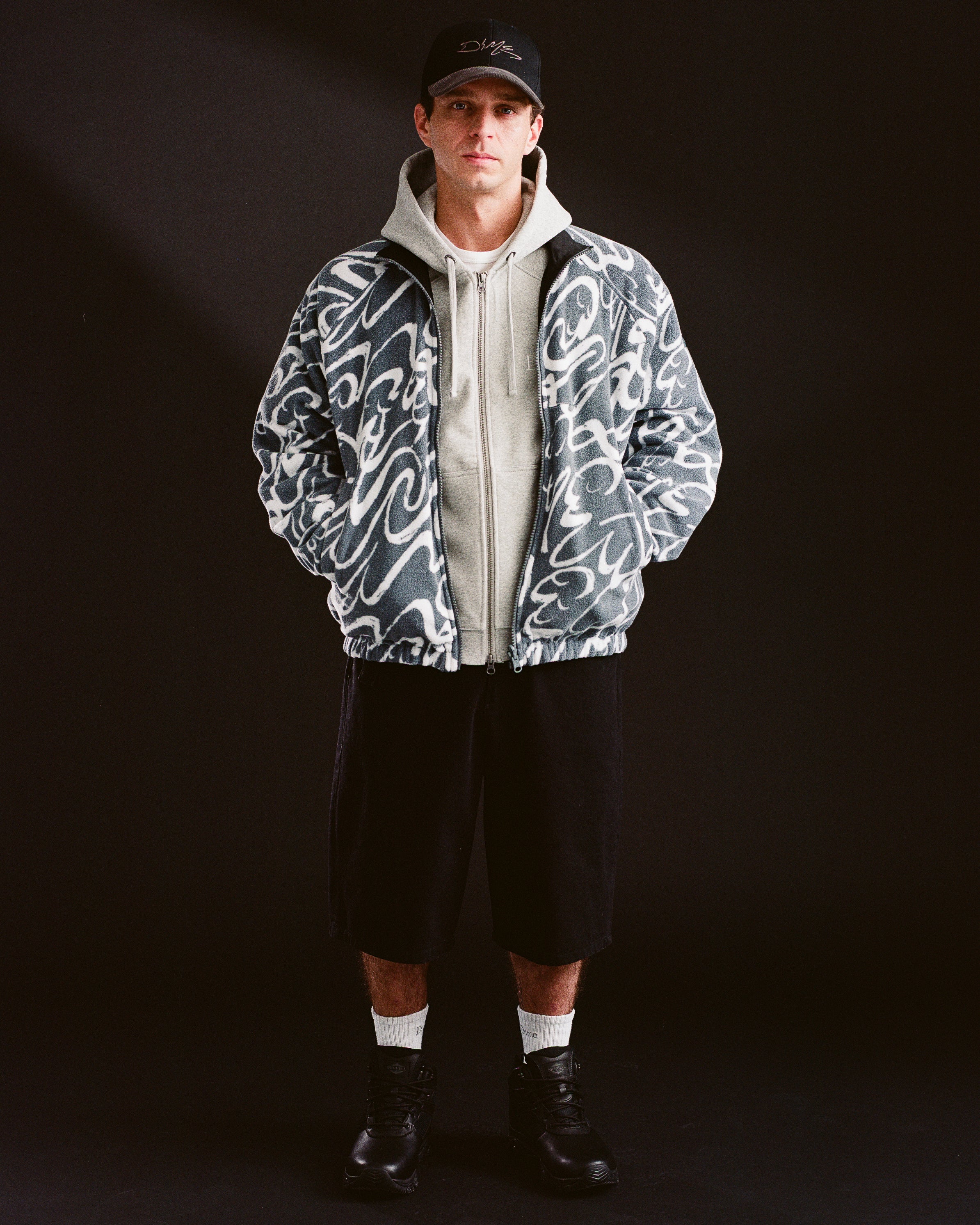
Superposé pour la saison : G-Pant dans un coloris naturel ou noir délavé, un hoodie Dime (une marque canadienne avec la même combinaison de crédibilité contre-culturelle et de portabilité réelle qui fait fonctionner Gramicci), et une coquille ou un molleton par-dessus. C’est le gorpcore en version canadienne — assez pratique pour un vrai automne à Kelowna, agencé avec assez d’intention pour se lire comme réfléchi plutôt que fonctionnel. La jambe ample du G-Pant fonctionne particulièrement bien contre une silhouette de hoodie écourté.
Le look technique : Nylon Packable G-Short dans un coloris saisonnier audacieux, un col monté technique ou un molleton à demi-fermeture éclair, et une chaussure de sentier — la Salomon XT-6 ou la New Balance Fresh Foam Hierro sont toutes deux de solides choix. Ajoutez un sac à dos de jour technique et vous obtenez un look véritablement habillé pour le plein air, mais agencé avec l’instinct de la couleur et le sens des proportions de quelqu’un qui se soucie de ce qu’il porte.
L’édition japonaise épurée : G-Pant en pierre ou blanc cassé, un simple t-shirt de coton rentré, et des New Balance 550. Retenu, axé sur la qualité, référentiel. C’est ainsi que Tokyo porte Gramicci — et cela communique quelque chose de précis sur le goût de celui qui le porte sans l’annoncer.
Le principe constant à travers tous ces looks est la proportion. Les bas Gramicci portent du volume — l’entrejambe gousseté et la jambe ample sont le but. Gardez le haut du corps relativement contenu et le look reste équilibré. Parcourez la collection Gramicci complète chez Gallery Streetwear pour trouver les pièces de la saison en cours.
Pourquoi Gramicci compte maintenant
Gramicci vit son moment parce que les conditions culturelles qui la rendaient pertinente au début des années 1990 sont revenues, un vocabulaire en prime. L’appétit pour des vêtements qui se justifient autant par la fonction que par l’esthétique n’est pas une tendance passagère — c’est une correction qui s’éloigne de l’ironie et du formalisme qui ont dominé la mode tout au long des années 2010. La construction technique, l’honnêteté des matières et des designs qui portent une véritable réflexion sur l’usage sont exactement ce que recherche la génération actuelle d’acheteurs de streetwear.
Ce que Gramicci offre et que la plupart des marques tentant d’occuper cet espace ne peuvent pas offrir, c’est la légitimité. Le gousset à l’entrejambe n’a pas été inventé pour une planche d’ambiance. La ceinture en sangle intégrée n’était pas un détail de style — c’était la solution à un vrai problème que Mike Graham a rencontré sur une vraie paroi rocheuse. Plus de quarante ans de continuité de design signifient que la marque possède des archives qui valent vraiment la peine d’être explorées, et l’intendance japonaise de la marque depuis le milieu des années 2000 a fait en sorte que la qualité et l’intelligence de design des originaux ont été maintenues et étendues plutôt que diluées.
Dans un marché rempli de marques qui jouent la crédibilité plein air, Gramicci l’a gagnée dans un garage du Yosemite et elle alimente ce compte depuis.
Procurez-vous Gramicci au Canada
Gallery Streetwear à Kelowna, en C.-B., est un détaillant canadien autorisé pour Gramicci, offrant une sélection soignée de pièces de base et de sorties saisonnières. Que vous bâtissiez votre première tenue Gramicci ou que vous ajoutiez à une collection existante, l’équipe de Gallery connaît le produit et peut vous aider à trouver la bonne coupe. Magasinez la collection Gramicci actuelle en ligne chez Gallery Streetwear — avec de nouvelles pièces qui arrivent à chaque saison.
Questions fréquentes
Où puis-je acheter Gramicci au Canada ?
Gallery Streetwear est un détaillant Gramicci canadien autorisé situé au 588, avenue Bernard à Kelowna, en C.-B., et expédie Gramicci partout au Canada. Vous pouvez magasiner en personne au centre-ville de Kelowna ou commander en ligne sur gallerystreetwear.ca. Expédition suivie gratuite sur les commandes canadiennes de plus de 150 $ CA.
Quelle est la rapidité d’expédition de Gallery Streetwear ?
Les commandes partent de Kelowna, en C.-B., en 1 à 3 jours ouvrables. Le délai de livraison varie selon la destination. Expédition suivie gratuite sur les commandes canadiennes de plus de 150 $ CA, y compris les articles en solde et d’archive. Les commandes canadiennes de moins de 150 $ sont calculées selon le poids à la caisse. La cueillette locale est offerte au 588, avenue Bernard, au centre-ville de Kelowna.
Qui a fondé Gramicci ?
Gramicci a été fondée en 1982 par Mike Graham, un grimpeur californien de la génération des Stonemasters du Yosemite qui fabriquait de l’équipement dans son garage d’Oxnard. Le nom vient de Michelangelo Gramicci, le faux alias italien que Graham avait adopté pour une ascension du Half Dome en 1974.